Have you heard of the principal-agent problem? It shows up whenever one person hires another to act for them, and the two don’t want exactly the same thing. The agent usually knows more than the principal and can’t be watched all the time, so the agent’s choices end up suiting the agent a little more than the principal. In an MCST, the council is the principal and the managing agent is the agent, which makes MCST managing agent oversight harder than it looks.
The MA advises and executes the work
In most professions, the person who recommends what to do is not the person who does it. You hire an architect to design and a contractor to build. You hire a consultant to recommend and someone else to implement.
In an MCST, the MA does both. It tells the council what needs fixing, which vendor to use, how much it should cost, and when to do it. Then it runs the job, checks the work, and processes the payment. Planning and execution sit with the same organisation, so nobody is positioned to ask “did we really need to do this, and was it done properly?”
When the same party writes the brief, delivers the work and signs it off, the council ends up reviewing a conclusion rather than an analysis.
MA fees don’t reward the best advice
Consulting firms charge well because they are paid for the quality of the advice. MA fees in Singapore are not set up that way. The work is operational and the fees are modest. Where there is a year-end bonus or a performance target, it is usually tied to keeping the account, not to whether the estate is better off.
So the advice that is easiest and safest for the MA often differs from the advice that is best for the estate. Sticking with the familiar vendor avoids friction. Recommending the bigger job can be easier than defending a smaller one. Not raising an awkward issue keeps the relationship smooth. None of this requires anyone to act in bad faith. People respond to the incentives in front of them, and the council would do the same in their shoes.
MCST council members are volunteers with little at stake
A company’s board has a reason to care. Directors are paid, hold shares, or have a reputation riding on the outcome. Even in charities and religious organisations, volunteers get something back, whether it’s a sense of purpose, a community, or a cause they believe in.
MCST council members mostly get none of this. There’s no pay and no equity. Whether the estate is run well or badly is rarely felt personally, beyond the usual annoyances every resident has. Most are busy people who took the role because someone had to. It’s not realistic to expect volunteers like this to dig into quotations, chase defects, and cross-check invoices on top of their day jobs.
So the principal who is supposed to keep the agent honest has the least time, the least information and the least reason to do it. That is the dilemma.
What actually helps: independent MCST council oversight
We don’t think the answer is replacing the MA or asking council members to try harder. People change MAs all the time and the same problems tend to follow. Our view is to fix the process, not the people.
The idea is simple: give the council an independent record of what’s happening, one that doesn’t depend on the MA telling them. Information is power, and right now most of it sits on one side of the table.
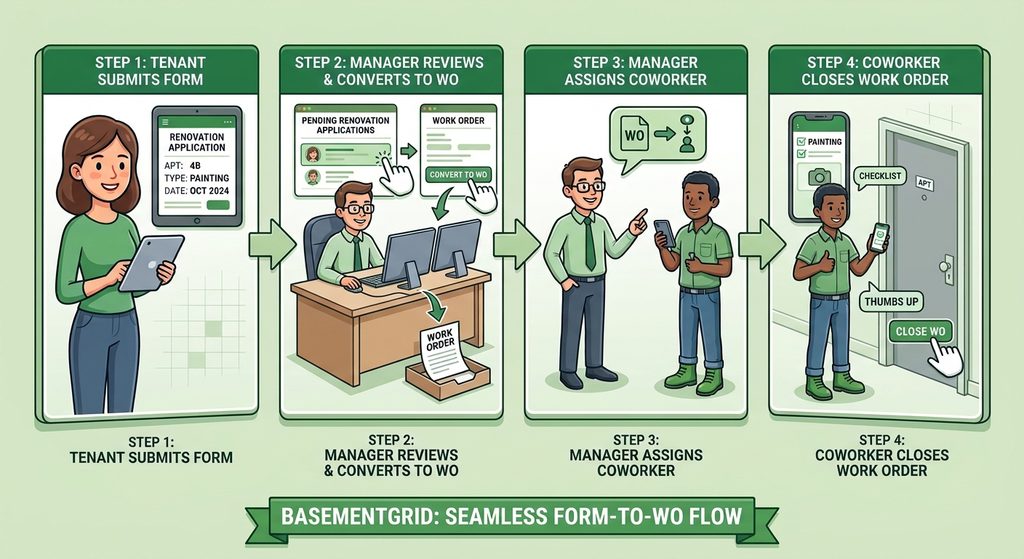
Basementgrid acts as that independent layer, an operating system for the estate that sits alongside whoever the current MA is. Around 70% of an MA’s work is day-to-day maintenance coordination, which we’ve written about here. That work runs through the app:
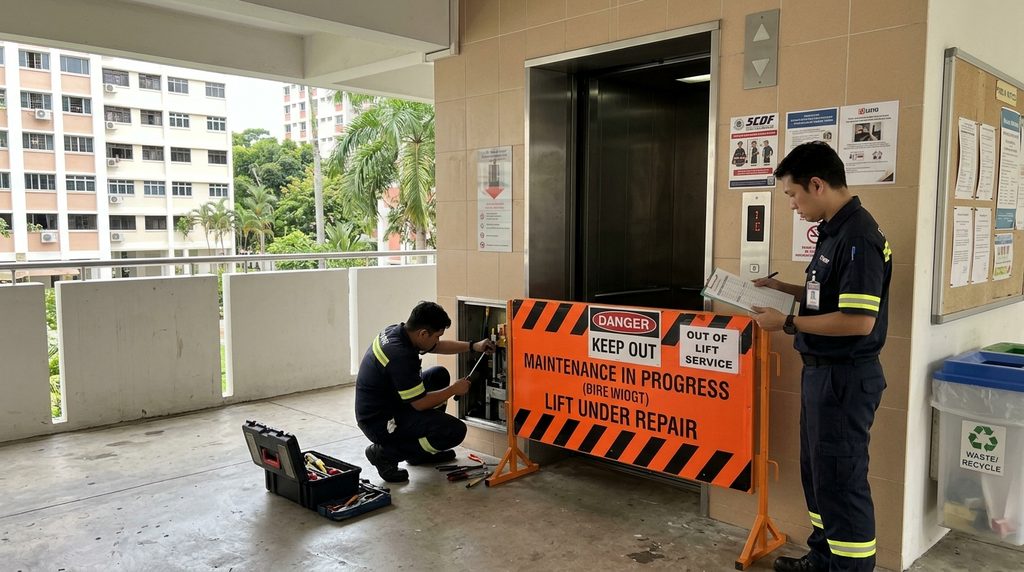
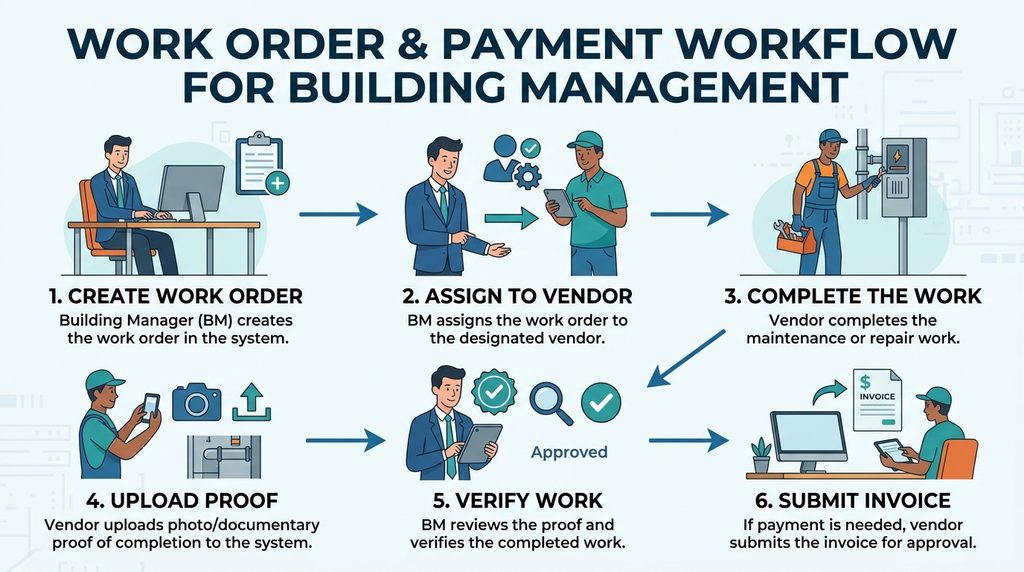
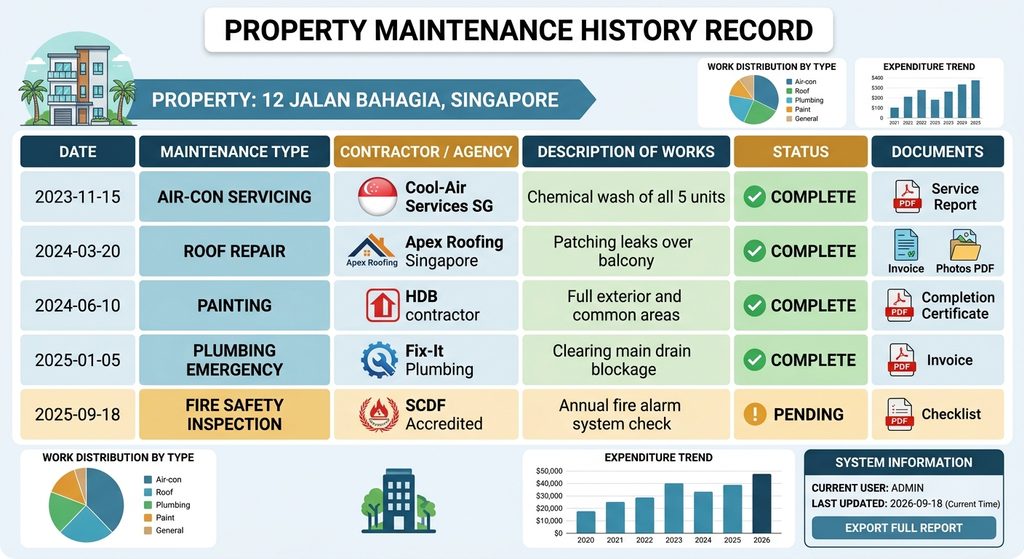
- Every job has a record. A work order is raised, assigned to a vendor, and tracked through each status, so the council can see what’s happening without asking.
- Spending above the council’s threshold needs approval inside the app. No more “I thought you approved it” and “I thought you knew” after the fact.
- Vendors submit quotes and invoices in the system. The amounts and documents are on file, and the invoice is matched against the approved work order.
- Proof of work comes first. Vendors clock in with GPS verification and submit photos and a completion record before the job can be reviewed and paid.
- The history stays with the estate. If the MA changes, the records don’t leave with them.
The MA still does its job, and that part is light: creating work orders and verifying completed work in the app. What changes is that the work now leaves a trail the council can see. Council members don’t have to review every job. They just have to know that the information is there when they want it, and that approvals actually passed through them.
That’s the part that closes the gap. The MA can still advise and execute, but it no longer does so in a way the council can’t see. The volunteers don’t have to become experts, because the process does the watching.
If you’re on an MCST council and want to see how it works, you can set up a workspace in about 3 minutes and run a first work order with your existing vendor. Book a 15-minute demo or check the help centre.
FAQs
What is the principal-agent problem in an MCST? It’s the gap between what the council wants and what the managing agent has an incentive to do, made worse because the MA both advises and executes.
How can an MCST council oversee its managing agent? By keeping an independent record of work orders, quotes, approvals and proof of work, so the council doesn’t depend on the MA to report what happened.
Do we need to change our MA to fix this? Usually not. Changing agents tends to carry the same problems over unless the process itself changes.