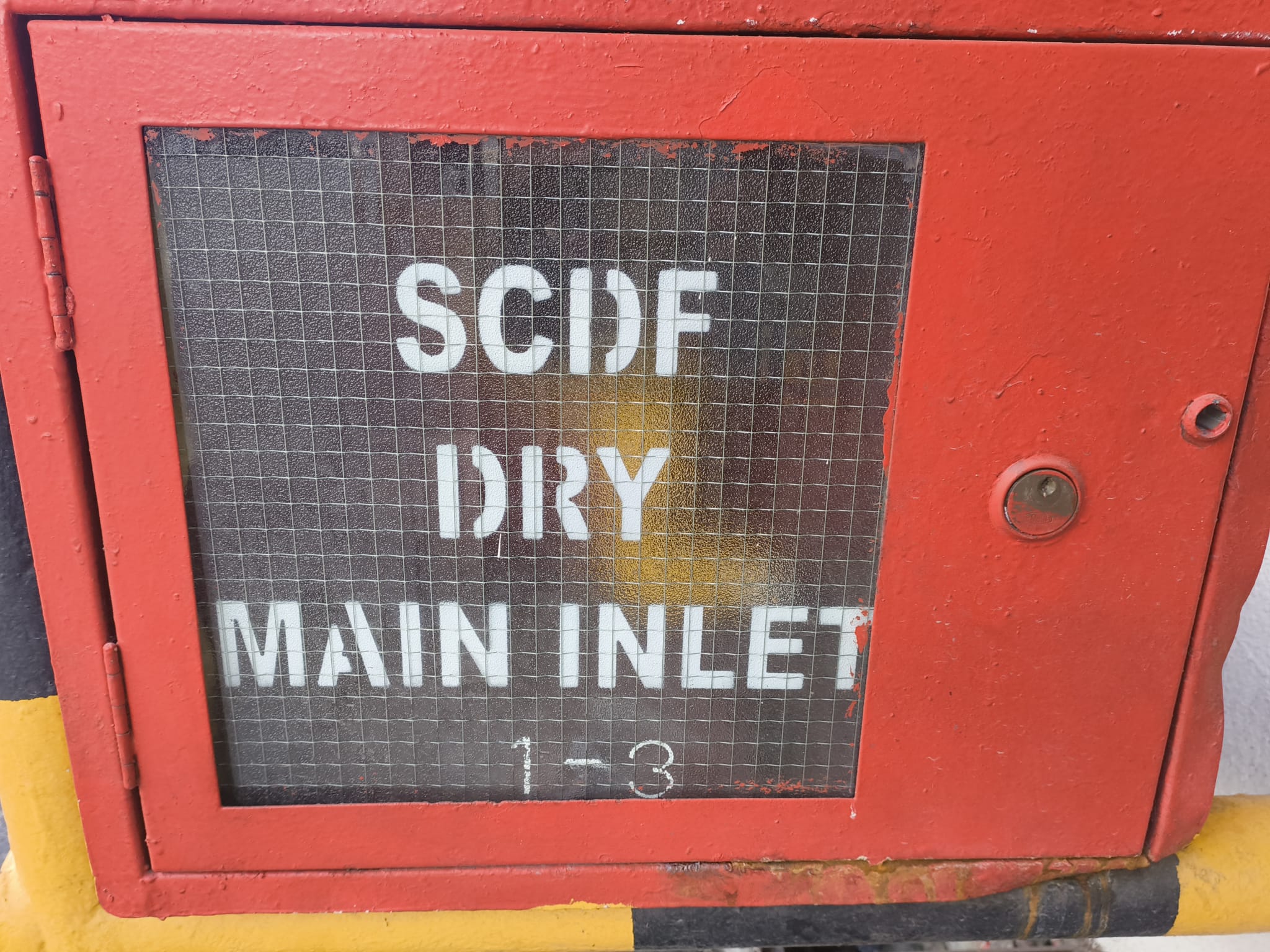
On 31 July 2026, SCDF was alerted to a fire at Block 309 Clementi Avenue 4. One resident died, and two firefighters suffered burn injuries fighting the blaze. CNA later reported the detail that matters most for anyone who manages a building: the dry rising main serving the block was found to be “not in proper working condition,” and the resulting drop in water pressure forced firefighters to fall back on a contingency — running hoses from the fire engine, up the staircase, to the eighth floor.
Here’s the part worth sitting with. This wasn’t a missed inspection. Holland-Bukit Panjang Town Council said the dry rising main had passed its most recent servicing and pressure test on 14 March 2026. Its preliminary assessment is that a coupling on the pipe became dislodged during the actual firefighting operation — not a fault that had been sitting there since the last test. SCDF is investigating, and no prosecution has been reported.
A system that passed its test in March and still failed in July is a harder problem than a skipped inspection, and a more common one than most councils want to think about. It’s also not a one-off — a July 2025 fire in Toa Payoh saw a different dry rising main fail for a different reason, forcing firefighters to haul hoses up ten storeys by hand. The systems are being tested. They’re still failing when they’re actually needed.
This particular block is under a Town Council, not an MCST, so the governance structure differs from a private condominium’s. But the underlying risk is the same one every MCST carries: a fire protection system that’s compliant on paper can still fail in the moment it’s called on.
What SCDF already requires
Every building in Singapore has to go through an annual Fire Certification to maintain the integrity of its fire protection systems. The scope is broad — SCDF inspects, among other things:
| Emergency power supply | Pressurisation system |
| Sprinkler system | Atrium smoke control system |
| Fire alarm system | Mechanical ventilation for basement |
| Wet riser | Air-conditioning system |
| Dry riser | Voice communication system |
| Lift | Fire Command Centre |
The inspection itself runs in three stages:
- Stage 1 — System operation test during a simulated fire alarm activation
- Stage 2 — System operation test under secondary power supply by generator
- Stage 3 — Testing of individual installations or fire protection systems throughout the building
If everything passes, the fire certificate is issued. If it doesn’t, the affected systems have to be rectified before the certificate is granted — and occupying a building on a lapsed certificate is itself an offence.
So the framework for catching a fault is already there, and it’s thorough. What the Clementi incident shows is that a system can clear all three stages and still fail months later, under the specific physical stress of an actual fire. Passing the test tells you the system worked on the day it was tested. It doesn’t guarantee every coupling and joint will hold when it’s finally under real pressure.
What a dry riser actually is
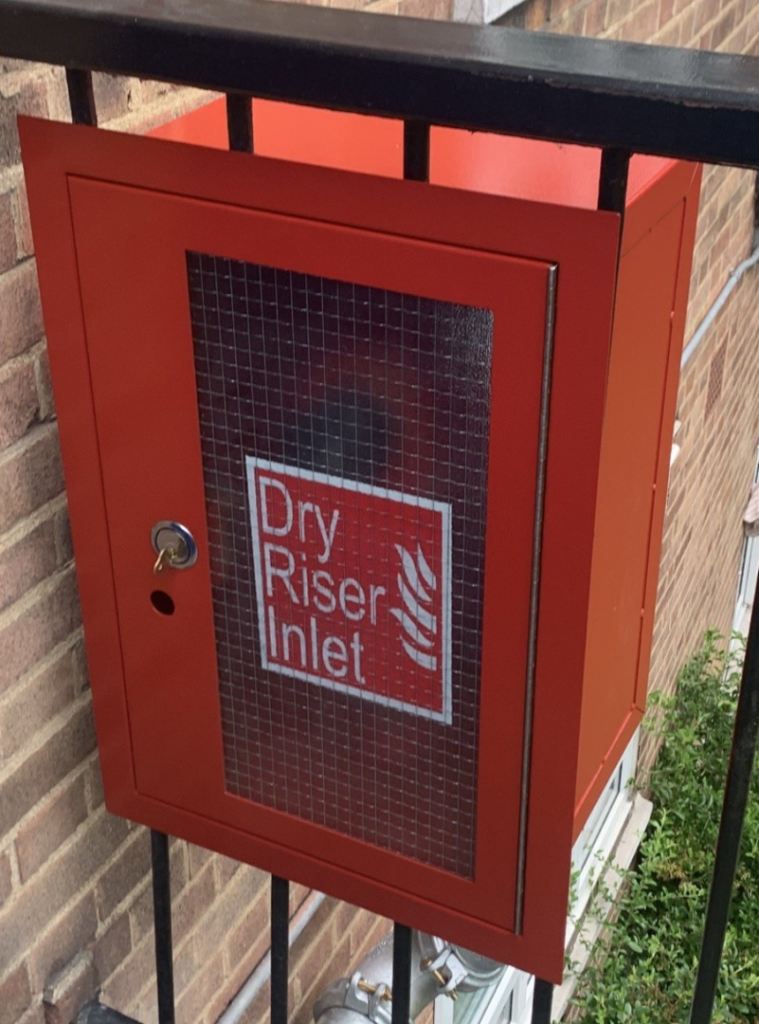
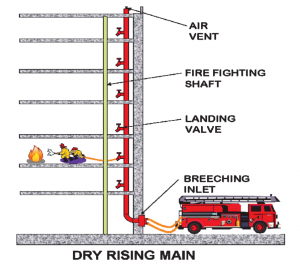
Worth zooming in on the component itself. A dry riser is a fixed, empty pipe running vertically through a building — usually inside a staircase or service core — with an inlet at ground level and outlets on each floor. It carries no water day to day. In a fire, firefighters connect a pump to the ground-level inlet and charge the pipe from a hydrant, which is what lets them get water to an upper floor fast instead of dragging pressurised hoses up flight after flight. As FireTech Dry Risers explains, the system only proves itself the moment it’s actually charged with water — which is exactly why routine maintenance matters more than it looks like it does. A system that sits dry and untouched for months can develop a loose coupling, a stuck valve, or corrosion that no one notices until the pipe is finally pressurised in a real fire.
That’s the job of the fire safety vendor: not just showing up for the twice-yearly visual check and the annual pressure test, but treating each visit as the only chance to catch a fault before the system is needed for real. A proper service includes checking every joint, coupling, and landing valve, not just confirming the pipe holds pressure for the duration of the test.
Where the digital record comes in
This is the gap Basementgrid is built for. Not to stop a coupling from working loose — no software does that — but to make sure that when something fails anyway, the MCST isn’t reconstructing its maintenance history from memory or a folder of PDFs. A customised checklist for every fire protection asset on SCDF’s list, tied to the actual servicing and testing schedule, with vendor sign-off, photos, and timestamps logged against each task, means the MCST always has an answer ready: here’s when it was last serviced, here’s what was checked, here’s who did it.
That record doesn’t prevent a fire. It’s what lets a council respond to an investigation with evidence instead of memory — and what lets an MCST move through exactly the kind of scrutiny Holland-Bukit Panjang Town Council is now facing, quickly and credibly.
The same structure pays off outside a crisis, too. We’ve seen it firsthand with MCSTs losing thousands of dollars to inflated vendor quotations — the same lack of lead time and documentation that leaves a council exposed after an incident is what lets a vendor pad a quote once they’re already on site with no one left to say no to. Give the council early notice and a documented scope of work, and both problems shrink at once.
Fix the process, not the people
Council members are volunteers, not fire engineers, and they shouldn’t have to be. But when a system that was tested and passed still fails, the difference between a council that looks prepared and one that looks like it got lucky for years is whether the paper trail exists before the incident, not after it.
Start building that record now. As we like to say at Basementgrid: fix the process, not the people.