BCA is pretty clear about this on their own site: a Managing Agent “may be employed” by an MCST — it’s optional, not a requirement under the Building Maintenance and Strata Management Act. The council is empowered, and expected, to manage its own affairs. What trips most councils up isn’t the law. It’s that maintaining shared property — lifts, pools, water tanks, cleaning, security, landscaping — genuinely takes a system to run well, and most self-managed estates never build one.
We broke this down before: an MA’s job is roughly 70% maintenance coordination and 30% admin work (books, minutes, AGMs). We briefly covered how to handle the 30% with outsourced bookkeeping and AI-assisted minutes. This article is about the 70% — the shared-facility maintenance most councils assume needs an MA’s staff to chase. It doesn’t. It needs a system.
And it’s worth being precise about what “system” means here. Basementgrid isn’t a checklist you hand your building manager and hope he ticks off. A checklist still depends on someone remembering to open it, fill it in honestly, and flag it if something’s wrong. The maintenance process — schedules, thresholds, sign-offs, proof of work — is built into the platform itself. It’s not a document your BM checks. It’s the thing that checks on your building for you. That’s the difference between hoping your BM caught something and actually having eyes on every lift, pool, and vendor whether or not anyone remembered to look.
1. Lifts: The One Thing You Can’t Afford to Get Wrong
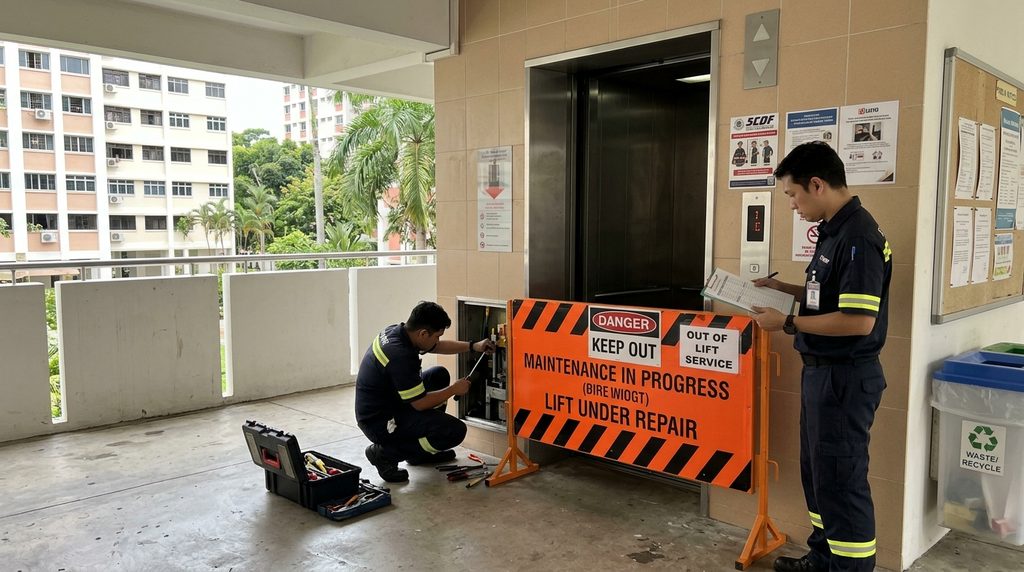
Lifts are the one area where the compliance stakes are highest and the least optional. BCA requires all lifts to be maintained by a BCA-registered Fixed Installation contractor, at a minimum monthly if no manufacturer schedule applies, plus an annual inspection and test by that contractor with an independent examiner present. Get this wrong and it’s not just a fine — it’s a safety issue and it affects your Permit to Operate (PTO).
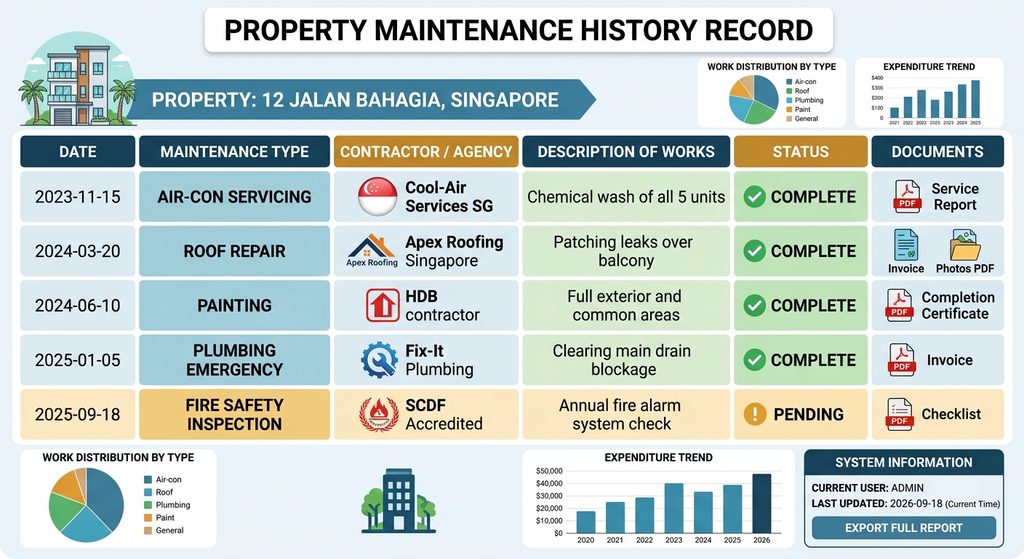
On Basementgrid, every lift is set up as an asset with its own digital record: commissioning date, warranty status, and a full history of every work order raised against it. When the monthly service or annual test comes due, the reminder goes to whoever’s tracking compliance instead of living in someone’s head or a shared spreadsheet. And because every WO ties an amount to a specific piece of work, the council can see that the invoice paid to the lift contractor actually matches what was issued and done — not just “lift maintenance, $X” on a bank statement with no paper trail behind it.
2. Cleaning Contractors: Paying for a Checklist, Not a Promise
Cleaning contracts usually promise a scope — daily lobby cleaning, weekly common corridor mopping, quarterly deep clean — that nobody actually checks against. Basementgrid lets you build a custom checklist matched to what’s in the contract, whether it runs monthly or quarterly, so the contractor has a defined list to complete rather than a vague expectation, and the council has something concrete to hold them to.
Once the cleaners mark the checklist complete, it goes to the BM for review before anything gets billed. If the BM isn’t satisfied, they can reject it and send it back for rework — no invoice goes out until the BM actually accepts the work. Only once it’s accepted can the cleaning vendor submit their invoice. Every step, checklist completion, rejection, rework, acceptance, is timestamped, so there’s no after-the-fact argument over whether the work was done properly or on time.
3. Security: From Watchman to Watch System
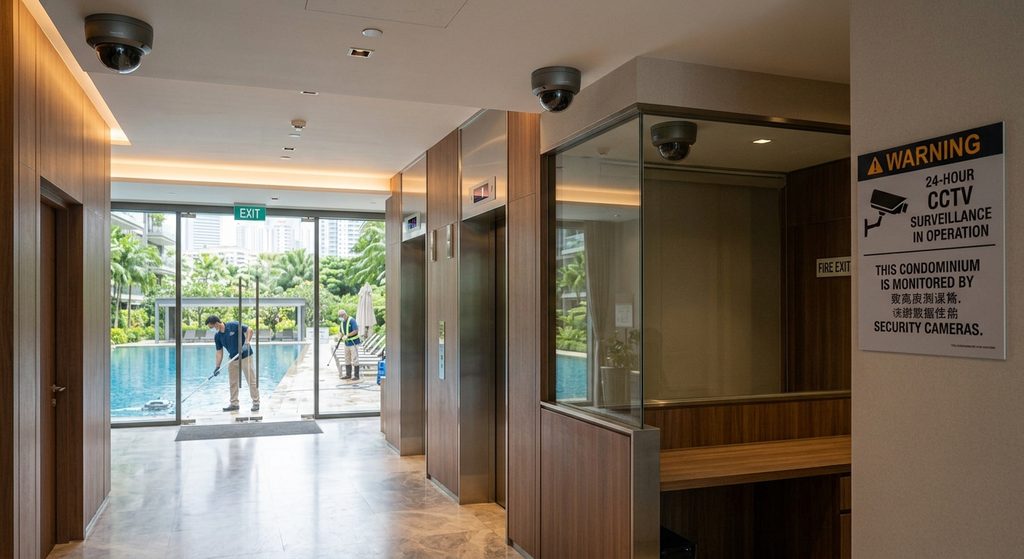
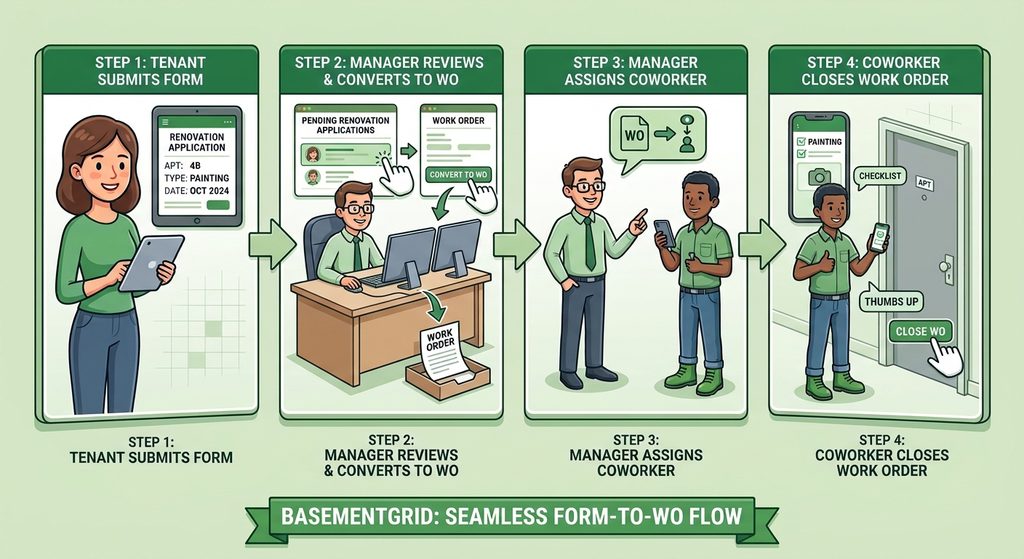
If your estate has a stationed guard, patrols usually turn up faults that never get logged anywhere formal — a broken gate sensor, a flickering corridor light, a leaking pipe in the basement. On Basementgrid, the guard can report a fault directly during patrol, and it converts straight into a work order that goes to the right vendor. The guard can hold the role of raising the WO itself, so a fault gets logged the moment it’s spotted rather than waiting for the BM to be free to do it. Acceptance of the completed work still stays with the BM, so the guard’s job is just to flag it fast, not to sign off on it. That split keeps the BM’s workload lighter without losing the checkpoint that matters. For anything above a set spending threshold, it doesn’t go out automatically — it needs a majority vote from council members first, using the same approval threshold that already governs other spending on the platform. Small stuff gets fixed fast; anything material still needs the council’s sign-off.
Worth noting too: CCTV is increasingly the new guard. The Singapore Police Force itself has been moving in this direction in our own neighbourhoods, expanding its PolCam network to more than 200,000 cameras with officers running “virtual patrols” from a command centre rather than relying solely on boots on the ground. If your estate is weighing whether it still needs a stationed watchman or concierge, that’s the direction worth considering — CCTV coverage feeding into a system like Basementgrid, rather than a person whose only record of a patrol is their word for it.
The one gap CCTV alone doesn’t close is telling a false alarm from a real one before it escalates. For that, the best bet is still a resident volunteer in the community, someone who can eyeball the footage or the site itself and confirm whether it’s worth acting on, rather than every alert automatically triggering a callout.
4. Water Tank Washing: The Annual Deadline Nobody Remembers Until It’s Late

This one has real teeth. PUB requires every MCST with a water storage tank to engage a Licensed Plumber to inspect, and where needed clean, disinfect and certify the tank at least once every 12 months. Miss the deadline and it’s an offence under the Public Utilities (Water Supply) Regulations — a fine of up to $10,000, or up to 12 months’ imprisonment, or both. PUB sends reminder emails, but they explicitly tell MCSTs not to rely on that alone.
Basementgrid tracks each tank’s certification date and reminds council members well ahead of renewal, not the week it’s due, so there’s enough runway to engage a Licensed Plumber and get it done instead of scrambling against the deadline.
5. Swimming Pool: One Missed Test Away from a Compliance Headache
NEA licenses swimming pools as Aquatic Facilities, and licensees have to send water samples to an SAC-accredited lab and submit results to NEA on a regular cycle — monthly submissions are the norm, alongside daily on-site testing for things like pH and chlorine. It’s easy for this to quietly lapse when it’s sitting on a pool contractor’s checklist and nobody’s cross-checking it. Basementgrid tracks the pool contractor’s testing and submission cadence against what NEA expects, so the council can catch a missed cycle before it becomes a compliance problem instead of finding out after the fact.
6. Landscaping, Pest Control, Electrical: Proof They Actually Showed Up
These are lower-stakes but higher-frequency — monthly visits that either happen properly or quietly don’t. Every vendor clock-in on Basementgrid is GPS-verified against the property, so there’s a real record that the landscaper, pest control technician, or electrician actually showed up rather than just submitting an invoice. Anything they flag as needing repair goes through the same work order flow as everything else — one process, not a different tracking method for every vendor type.
7. Other Vendors: Never Start From Zero Again
Need a new contractor for something that doesn’t fit an existing category? Every vendor that’s registered on Basementgrid, across any estate, can be searched and asked for a quote directly through the platform instead of starting from a WhatsApp recommendation and hoping. We’ve written more about how the vendor side of Basementgrid works if you want the full picture.
No Ghost Maintenance: Every Job, Traceable End to End
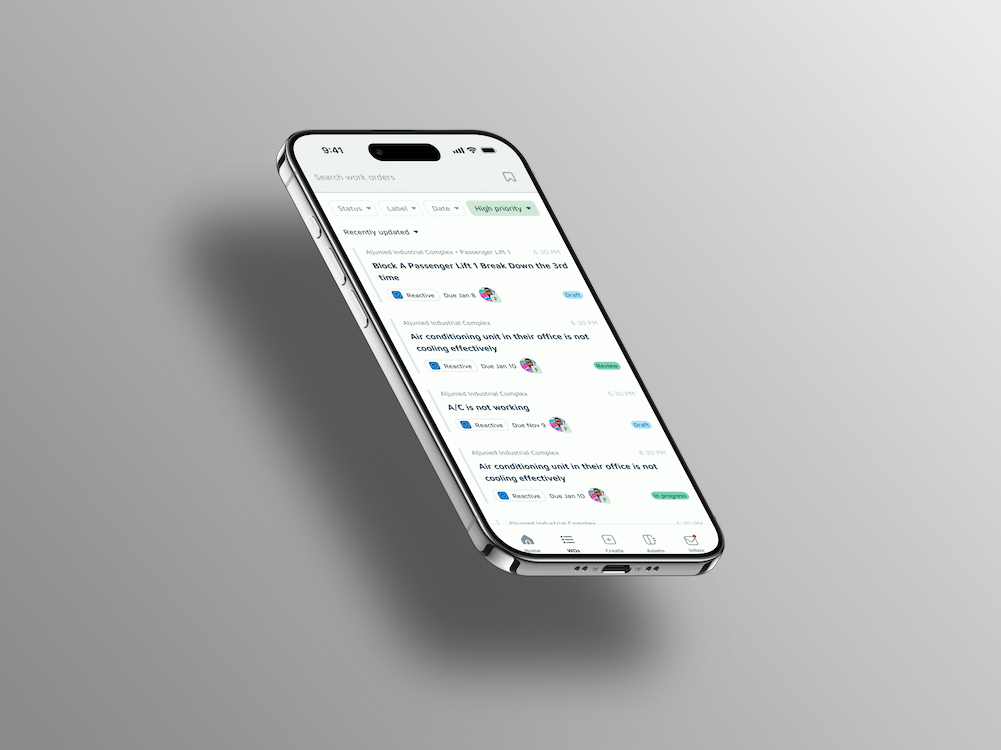
Tie all seven together and the pattern is the same process, repeated: a designated council member acting as building manager creates the work order, assigns it, and verifies the work with proof uploaded by the vendor — all from a phone, no separate system per vendor type, and no reliance on anyone remembering to check a list. Once a WO is issued, its details are locked — scope, amount, vendor, can’t be quietly edited after the fact by either side, so there’s no room for a dispute over what was actually agreed.
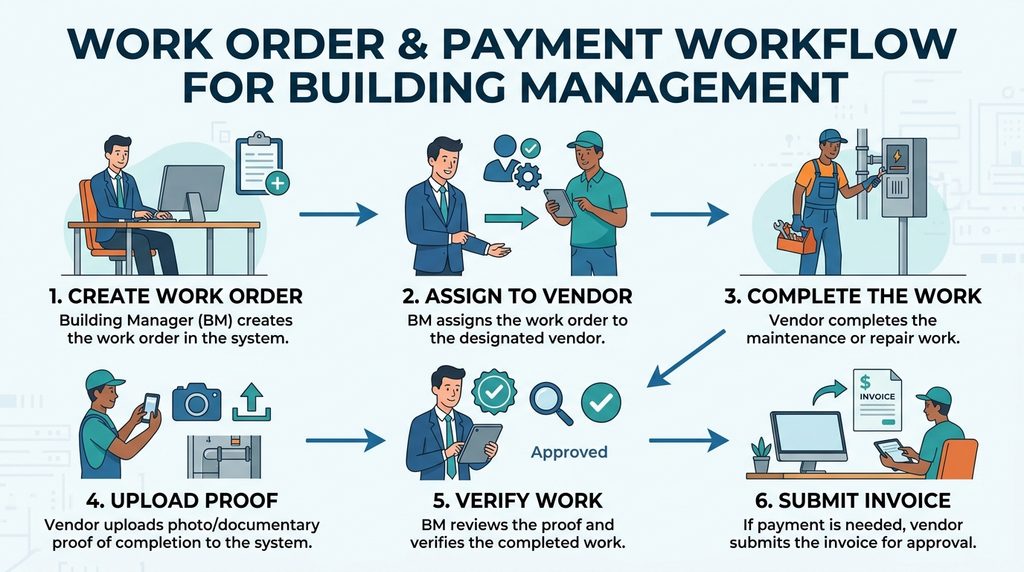
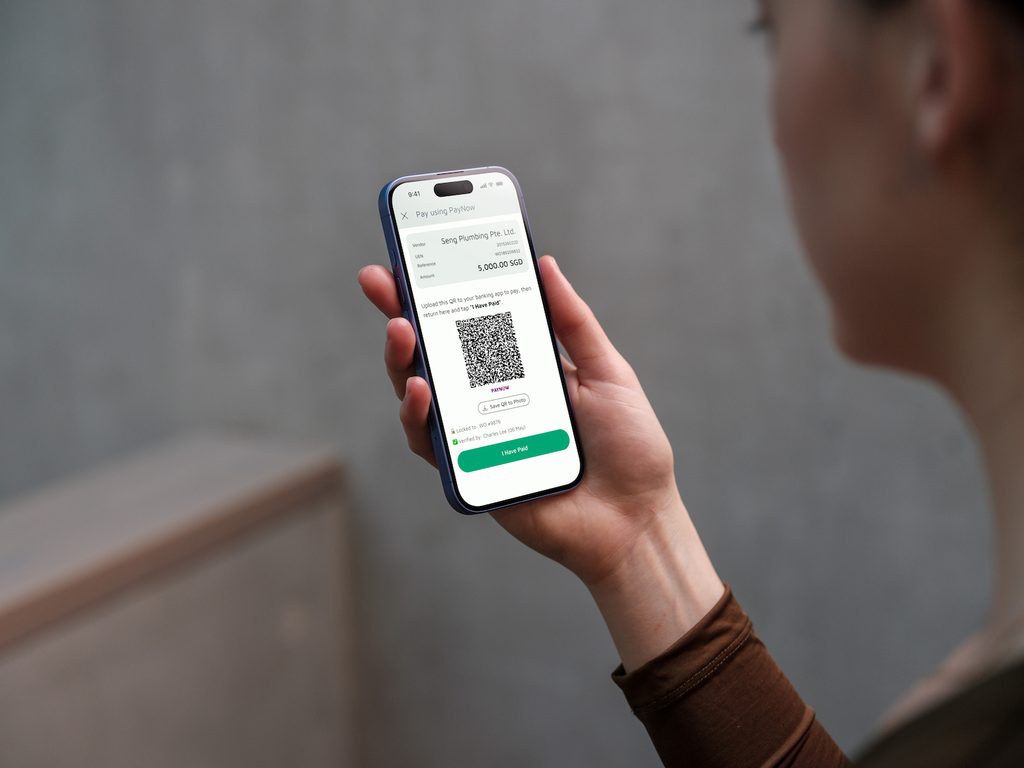
And it closes the loop all the way to payment. Residents can submit a work request in the app; the BM approves it and issues it to a vendor. Once the vendor finishes and uploads proof, the BM verifies it, and the invoice generates a PayNow QR matched exactly to the work order amount and the vendor’s UEN. Council members scan and pay — no manual reconciliation, no guessing whether an invoice matches what was actually approved. If something stalls, the activity log shows exactly where, so nobody’s left wondering if it’s the BM, the vendor, or the council holding things up.
Still need someone to actually be the BM? That’s fair — not every council has a volunteer with the time. Book a demo with us and we’ll put you in touch with a Managing Agent who already runs on Basementgrid, so you get the system without needing to find the person yourself.
Prefer to set it up yourself first? Get started here.
Next up: the other 30% — bookkeeping, AGMs, minutes, and compliance paperwork — and how a self-managed council handles that without an MA either.